Flo Health is the world’s largest health and fitness app focused on women’s health, boasting 85 million monthly active users and over 500 million installs. Flo serves as an essential health partner for users across all life stages, offering cycle prediction, pregnancy tracking, symptom checkers, and a robust community platform.
To support this massive user base, Chief Technology Officer Roman Bugaev oversees a highly efficient engineering organization of about 200 people. Structured like small startups within a larger company, Flo’s cross-functional teams encompass iOS, Android, backend, QA, and ML engineers, alongside medical and privacy experts. Here is how Flo Health leverages Jellyfish to keep their teams aligned, measure their AI investments, and drive continuous improvement.
Buying Over Building
Before Jellyfish, Flo Health relied on Jira, spreadsheets, and an internal BI tool powered by a data lake to track engineering progress. As the team scaled beyond a few core groups to over 20 distinct teams, maintaining this internal reporting infrastructure became incredibly time-consuming.
It was a full-time job for people at Flo to keep them up and running because you need to get a lot of data points from various systems. Our philosophy here is that if it's not core Flo business, it's better to buy something. Our users don't care whether we have Jellyfish or Jira; they care if we have the best possible user experience. We prefer to spend our engineering time on building the best possible user experience, not keeping up-to-date integrations.
Flo chose Jellyfish for its white-glove onboarding and out-of-the-box dashboards, moving away from manual data wrangling toward instant, reliable visibility.
Proving Resource Allocation
A standout feature for Bugaev’s team was Jellyfish’s Resource Allocation capabilities. Previously, advocating for technical debt or foundational work was a challenge. Teams would claim they needed 20% of their time for tech debt, but constant product demands often overwrote those intentions.
With Jellyfish, the conversation shifted from subjective requests to objective data. “You can visualize this and say, ‘Product manager, last time we did this, and because of that we haven’t invested into technical initiatives for quite a long time, and this is the chart that shows this,’” says Bugaev.
By continuously tracking these categories, Flo Health has been able to steadily increase the amount of time invested into Growth initiatives while systematically shrinking routine maintenance and bug fixes (KTLO) to between 5% and 10%.
A Holistic Approach to AI and Developer Experience
Like many forward-thinking organizations, Flo Health allows its engineers to experiment with cutting-edge AI tools. After seeing strong results, they rolled out GitHub Copilot and Cursor broadly. However, Bugaev emphasizes that successful AI adoption requires balancing speed with human well-being.
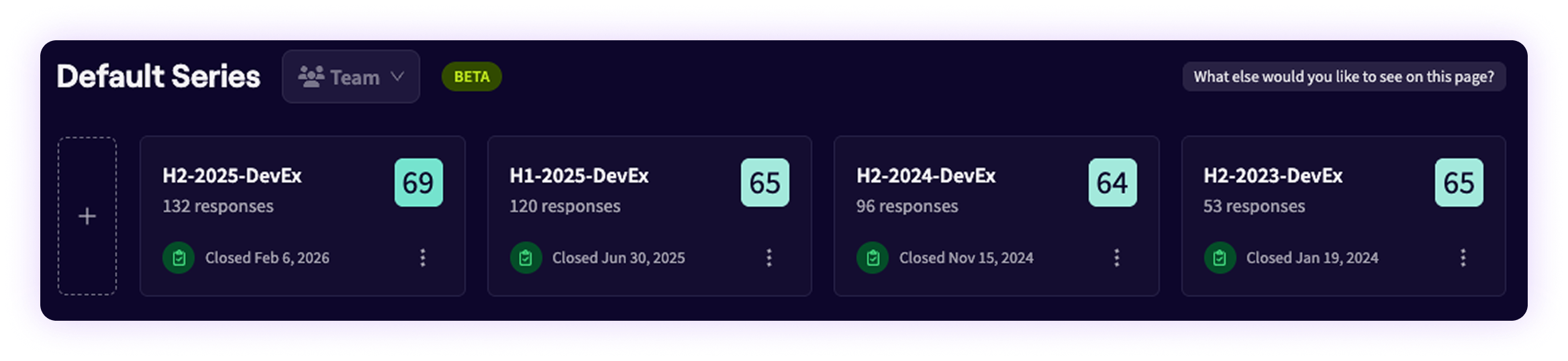
Flo Health uses Jellyfish to track baseline AI adoption rates and identify “power users,” but they also integrate Developer Experience surveys right alongside hard metrics like PR throughput and cycle time.
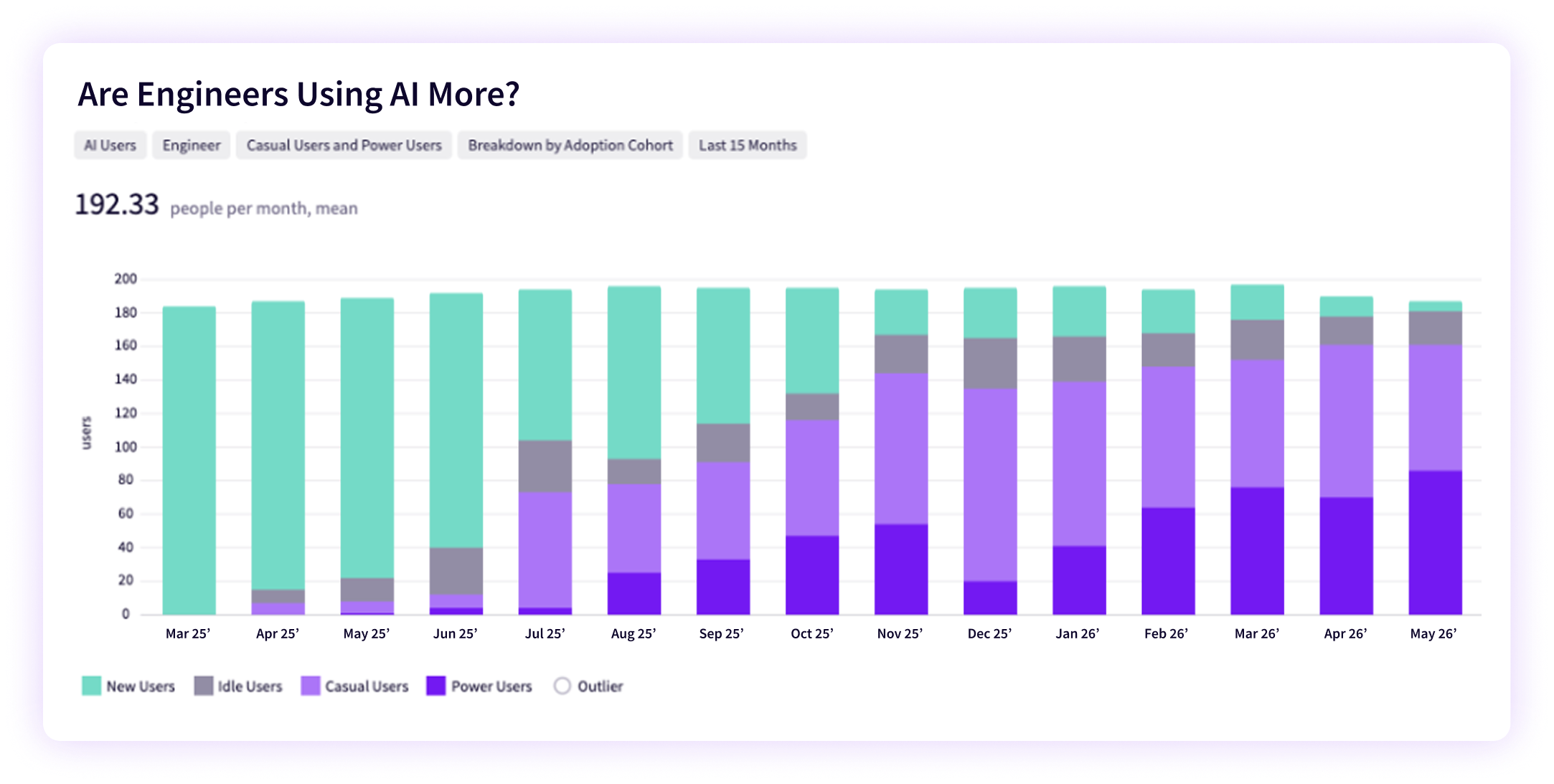
Recently I saw that a lot of people are close to burnout just because they use AI so much and it creates pressure... you suddenly work on multiple things at the same time. We want as much productivity as possible, but we also don't want to lose all our engineers just because they burn out.
By measuring both quantitative output and qualitative developer satisfaction in Jellyfish, Flo ensures they aren’t compromising quality or team health in the name of speed. This visibility has already yielded tangible DevEx wins, such as utilizing AI to boost their internal documentation scores from 50 to 59.
Speaking the Board’s Language
Beyond the engineering floor, Jellyfish has become a critical asset for Flo Health’s executive team and board of directors. Every six months, Flo Health presents a high-level Jellyfish report to their investors to clearly demonstrate where resources are going and how the company stacks up against the broader market.
“Our investors like the feature where we can benchmark ourselves to other companies,” says Bugaev. “It answers a lot of questions from investors like whether we are adopting AI with the speed expected from the market, whether we have proper performance management, and how we allocate resources. It gives a lot of tools for us to speak with investors in a language that they understand.”
Ultimately, Jellyfish has become deeply embedded in Flo Health’s operational DNA, from capacity allocation to weekly technical check-ins. As Bugaev puts it: “Once you measure something, you can improve it.”
Before Jellyfish
- High Maintenance Reporting: Relying on Atlassian tools, manual spreadsheets, and an internal Looker-based data lake became a full-time job to maintain, pulling focus away from the core product.
- Fragmented Visibility: With 20-30 cross-functional teams, it was difficult to get a holistic view of engineering capacity and dependencies across the organization.
- Gut-Driven Resource Allocation: Teams claimed to spend 20% of their time on technical debt, but leadership had no objective data to prove it or defend that time against new feature requests.
With Jellyfish
- Optimized Investment: Successfully shifted engineering capacity to consistently increase investment in Growth, while reducing “Keep the Lights On” (KTLO) work to just 5-10%.
- Balanced AI Rollout: Tracked the adoption of GitHub Copilot, Claude and Cursor alongside Developer Experience (DevEx) surveys to ensure rapid AI adoption didn’t lead to engineer burnout.
- Cross-Functional Alignment: Expanded Jellyfish usage beyond engineering to include medical, legal, and content experts, mapping the true end-to-end lifecycle of a feature.
- Board-Level Benchmarking: Provided investors with clear, company-level reports that benchmark Flo Health’s productivity, AI adoption, and capacity allocation against industry benchmarks.