Jellyfish Research just released our latest AI Engineering Trends report, updated through the end of February and now covering over 37 million pull requests. At this scale, the patterns are getting harder to ignore. What we’re seeing is no longer early experimentation, it’s the emergence of a real divide in how engineering teams are adopting and benefiting from AI.
Here are a few highlights from the most recent dataset:
Autonomous Agent Acceleration
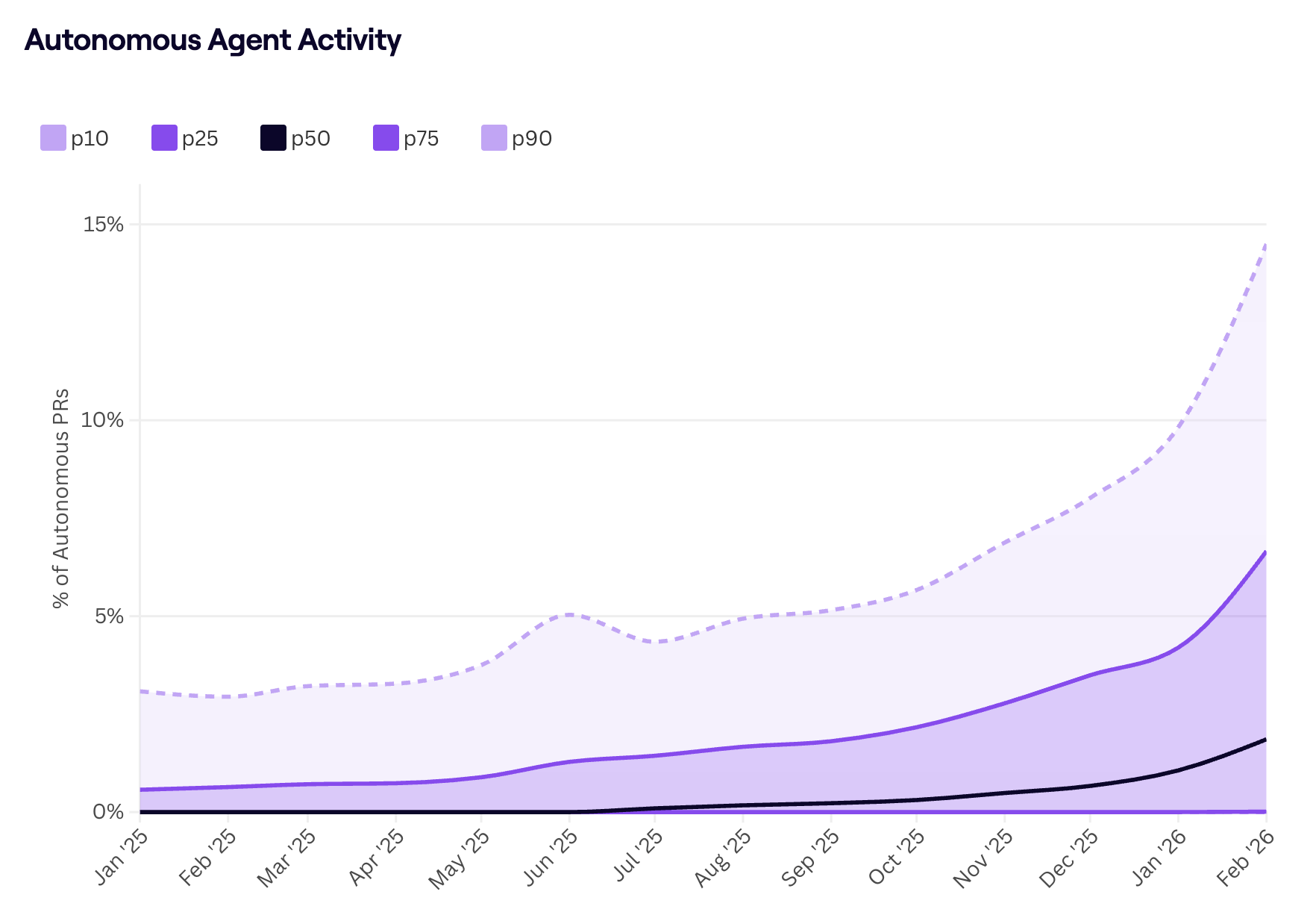
We’re seeing exponential growth in the use of autonomous agents, particularly among the most advanced companies. The top 10% (P90) jumped from 10% to 14.5% adoption in a short period, while the median company is still sitting around ~2%. That gap is not just large, it’s growing and quickly. The leaders are moving into agentic workflows, while the majority of teams are still operating in a more interactive, assistive model of AI usage.
PR Throughput Gains
At the same time, the gains in throughput remain significant. Companies with strong adoption of AI coding tools are continuing to see roughly 2x improvements in pull request throughput.
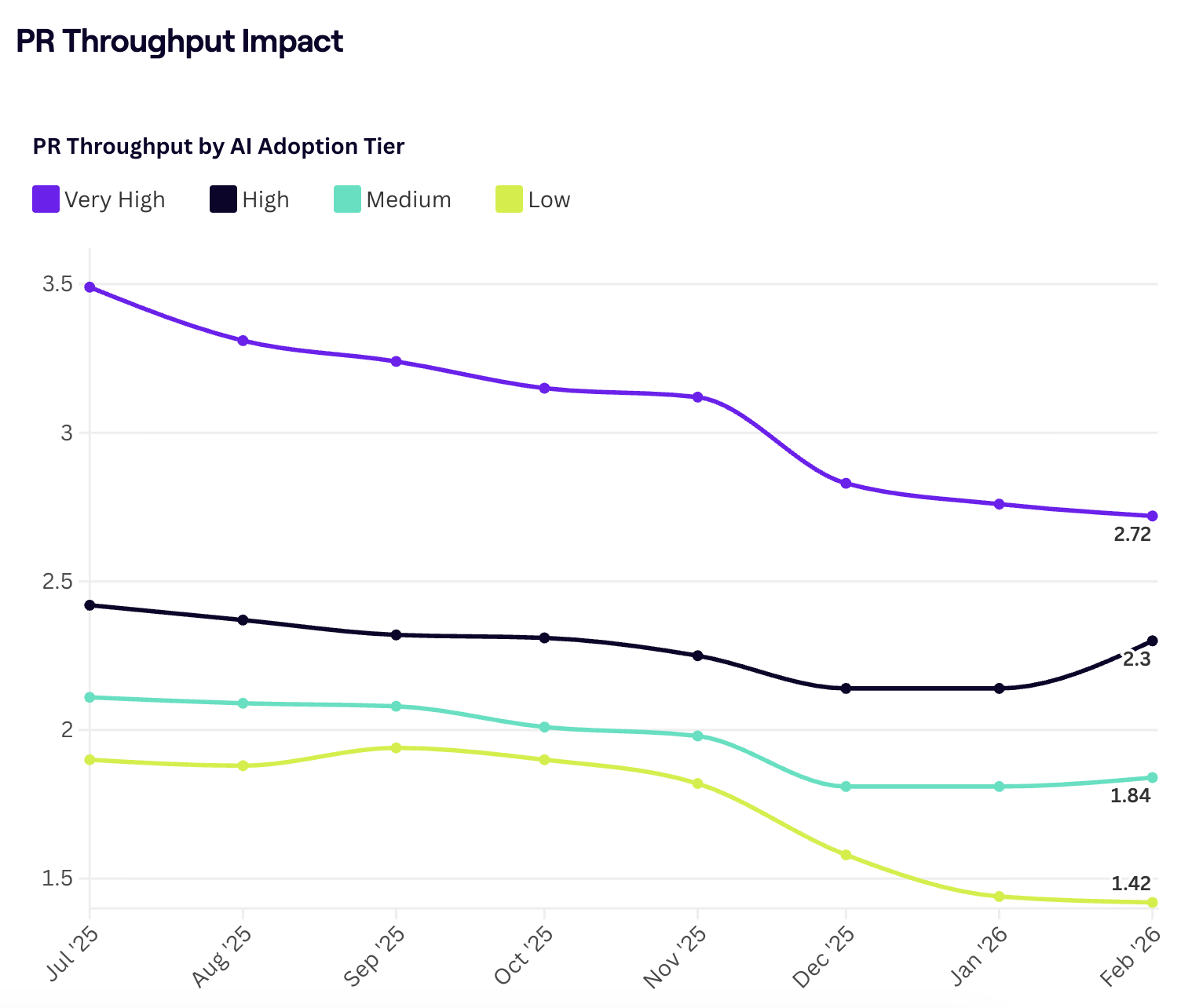
What’s notable, though, is that even teams with more modest levels of adoption are still seeing meaningful gains in the 30–60% range. This reinforces that AI is not an all-or-nothing investment – there’s value across the adoption curve.
That said, we’re starting to see early signs that these gains won’t scale indefinitely. As teams increase output, other constraints like PR reviews, quality assurance, and coordination begin to play a larger role. There’s also what we’d call an “agentic barrier,” where teams struggle to transition from interactive usage to more autonomous workflows. That shift may define the next phase of productivity gains.
Is quality an issue?
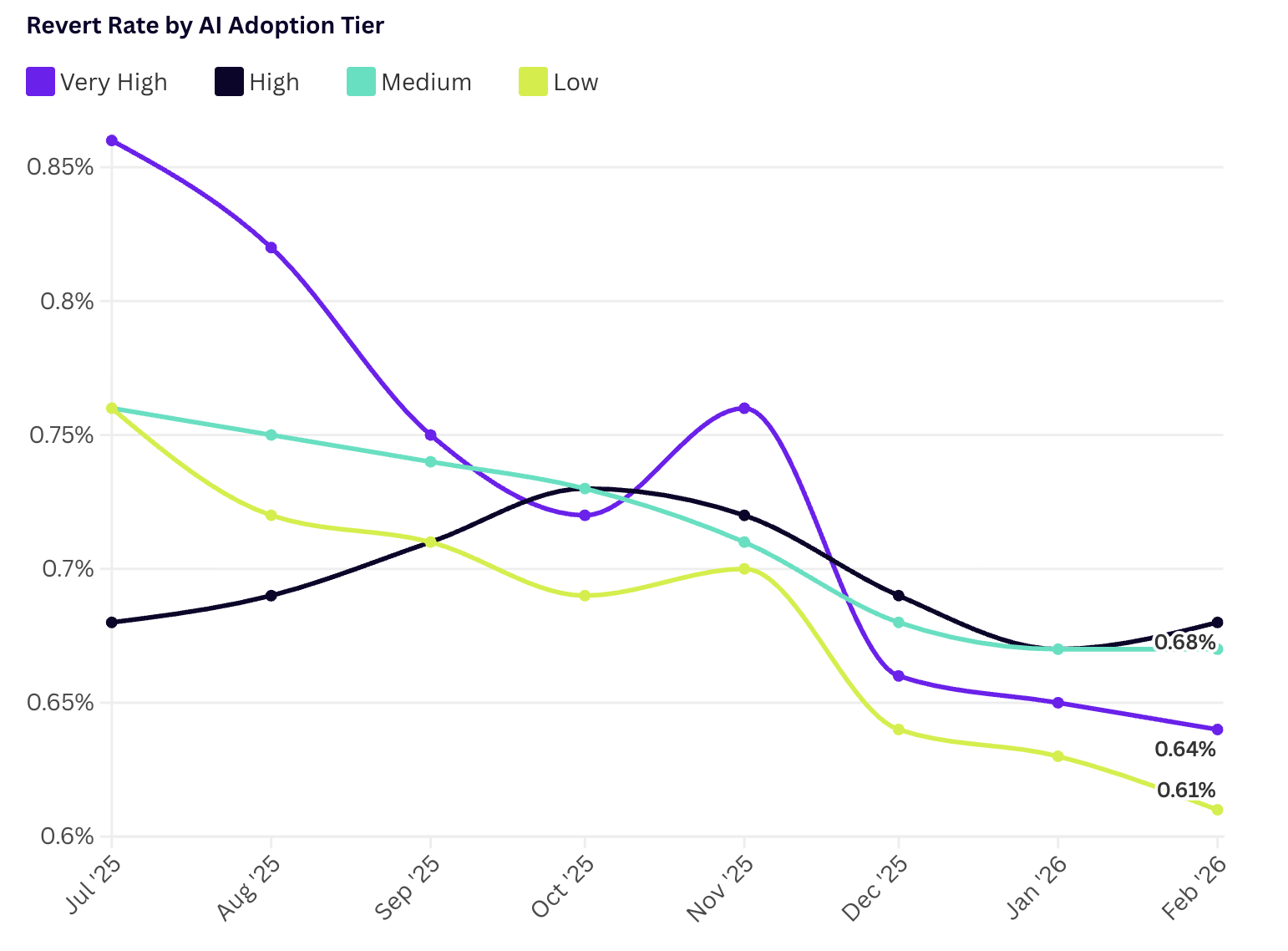
Quality remains one of the most closely watched aspects of AI adoption. So far, the impact is relatively small but trending upward. We’re seeing about a 5–11% increase in reverted code as AI usage increases. While that’s not large enough to outweigh the productivity gains, it’s not negligible either.
AI Provides More Than Incremental Improvements
Taken together, these trends point to something bigger than incremental improvement. The story isn’t just that AI is making teams more productive, it’s that it’s doing so unevenly. The gap between the leaders and everyone else is growing, driven in large part by how quickly teams are adopting more advanced, autonomous approaches to AI. The next phase of this shift won’t just be about whether teams are using AI, but how deeply they’ve integrated it across the SDLC.
AI Engineering Trends
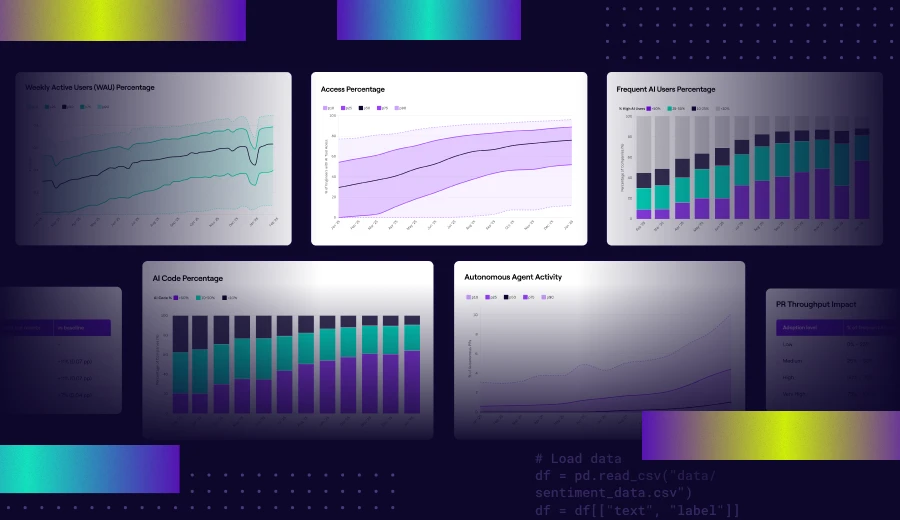
Ready to learn more? Explore the full AI Engineering Trends dataset.
View the dataAbout the author

Nicholas Arcolano, Ph.D. is Head of Research at Jellyfish where he leads Jellyfish Research, a multidisciplinary department that focuses on new product concepts, advanced ML and AI algorithms, and analytics and data science support across the company.