In this article
Managing a modern software development lifecycle is complicated. Engineering and operations teams often rely on a fragmented ecosystem of testing tools, deployment pipelines, and project management software. When these systems don’t talk to each other, you get silos, manual bottlenecks, and brittle software releases.
A DevOps platform solves this by bringing your entire toolchain into one centralized hub, allowing you to streamline workflows and ship code changes faster.
What is a DevOps Platform?
What is a DevOps Platform?
A DevOps platform is a comprehensive set of tools, processes, and frameworks designed to unify development and operations teams. Instead of forcing engineers to jump between disconnected applications, it acts as a centralized command center for your entire software development process.
By integrating source code management, automated testing, and infrastructure management into a single value stream, a DevOps platform eliminates manual handoffs. This end-to-end approach allows you to break down traditional silos, embrace continuous improvement, and deliver high-quality functionality to the end user.
How a DevOps Platform Works
How a DevOps Platform Works
A DevOps platform works by automating the software delivery process from the moment a developer commits code to the moment it hits production. It connects your delivery pipeline so that every step—building, testing, and deployment—happens seamlessly.
When engineers push new features, the platform triggers CI/CD pipelines that automatically compile the source code and run rigorous security and performance checks.
- If vulnerabilities are detected, the system provides real-time feedback loops to the developers so they can iterate
- If the code passes, the platform uses configuration management and orchestration to deploy the update.
This methodology ensures that software delivery is fast, scalable, and completely visible across your entire application lifecycle.
Features of a DevOps Platform
Features of a DevOps Platform
To fully support modern DevOps practices, a platform must offer a robust set of capabilities that govern the entire delivery lifecycle.
- Source code and version control: Centralized repositories (like GitHub or GitLab) manage code changes, ensuring total traceability and collaboration across your development teams.
- Continuous integration and continuous delivery (CI/CD): Automated deployment processes compile code, run tests, and prepare software releases without manual intervention, enabling true continuous deployment.
- Infrastructure as code (IaC) and provisioning: Tools automate the setup of cloud-native environments, whether you are running on-premises servers, AWS infrastructure, or microservices orchestrated by Kubernetes.
- DevSecOps and automated testing: Security checks and vulnerability scanning are embedded directly into the development lifecycle, ensuring code is secure before it deploys.
- Real-time monitoring and logging: Continuous tracking of application performance and infrastructure health provides immediate alerts and data to optimize your value stream.
- Automation tools and orchestration: The platform connects disparate scripts, testing tools, and manual processes into a unified, automated DevOps lifecycle.
Benefits of Adopting a DevOps Platform
Benefits of Adopting a DevOps Platform
A unified platform doesn’t just make engineers’ lives easier—it drives measurable business value. By consolidating your tools, organizations see immediate improvements in speed, stability, and team alignment.
- Unmatched delivery speed: According to the latest DORA research, elite DevOps teams deploy software 182 times more frequently and boast lead times that are 127 times shorter than low-performing teams. [*] A centralized platform automates these deployment processes, getting new features to the end user radically faster.
- Higher software quality and stability: Automated testing catches bugs before they reach production. JFrog found that 41% of organizations cite improved application quality as a top benefit of their DevOps platform, while 39% report spending significantly less time fixing broken apps. [*]
- True cross-functional collaboration: The same report shows that 51% of businesses rank increased collaboration between development and operations teams as the absolute number one benefit of their DevOps methodology. [*] When everyone looks at the same data, finger-pointing stops and continuous improvement
- Scalable infrastructure management: Whether you are running legacy on-premises servers, managing AWS environments, or orchestrating cloud-native microservices with Kubernetes, a DevOps platform standardizes your provisioning so your infrastructure scales effortlessly alongside your business.
How to Choose the Right DevOps Platform for Your Team
How to Choose the Right DevOps Platform for Your Team
To optimize your software development process, you need to evaluate solutions based on your unique architecture and team maturity.
- Evaluate your current ecosystem: Look at the project management and development tools your teams already use. The right platform should offer deep integrations with your existing source code managers, like GitHub or GitLab, rather than forcing you to rip and replace your entire workflow.
- Prioritize developer experience: If a platform introduces too much friction, your development teams will simply bypass it. Choose a toolchain that makes it easy for engineers to commit code, track changes, and iterate without wrestling with complex configuration management.
- Demand built-in DevSecOps: Security cannot be an afterthought. Ensure the platform embeds vulnerability scanning directly into the CI/CD pipelines so your teams can catch and fix security issues early in the software development lifecycle.
- Look for actionable analytics: The platform must provide real-time visibility into your delivery pipeline. You need clear dashboards tracking core metrics like deployment frequency and change failure rate, so you can measure success objectively.
Common Challenges When Implementing a DevOps Platform
Common Challenges When Implementing a DevOps Platform
Even with the best technology, transforming your software delivery process comes with hurdles. Watch out for these common implementation traps:
- Tool sprawl: It is tempting to buy specialized DevOps tools for every minor engineering problem. This creates a fragmented ecosystem that is impossible to maintain. Focus on a unified platform that handles the core lifecycle end-to-end.
- Cultural resistance: A new platform will not fix old habits. If DevOps teams refuse to share accountability, the platform will just become another silo. You must drive a cultural shift alongside the technical implementation.
- Security bottlenecks: If security teams still manually review every single code change before deployment, your automation is useless. You must shift security left, integrating it directly into the platform’s automated testing workflows to maintain velocity.
- Ignoring the metrics: Many teams implement a massive DevOps platform but fail to track the results. If you aren’t actively monitoring your deployment pipeline to find friction points, you cannot drive continuous improvement.
Quick Best Practices for Getting Started
Quick Best Practices for Getting Started
Transitioning to a unified platform is a major operational shift. To ensure your implementation actually improves your software delivery process instead of just adding overhead, follow these core practices.
- Start with a pilot project: Instead of migrating your entire engineering organization at once, choose a single, low-risk application or microservice. This allows your team to test the CI/CD pipelines and iron out any configuration management issues before scaling the platform across the company.
- Standardize your environments: Ensure your staging and production environments are identical. Use infrastructure as code to eliminate configuration drift, which guarantees that code changes behaving correctly during automated testing will work perfectly when they reach the end user.
- Automate your feedback loops: Set up your platform to send real-time alerts directly to the development teams the moment a build fails or a scan detects vulnerabilities. The faster engineers get feedback, the faster they can iterate.
- Define success with concrete metrics: Before you launch, decide exactly how you will measure ROI. Establish baselines for your deployment processes so you can clearly demonstrate how the new DevOps automation improves your value stream over time.
Bring Intelligence to Your DevOps Platform with Jellyfish
Bring Intelligence to Your DevOps Platform with Jellyfish
A DevOps platform handles the mechanics of shipping code, but it doesn’t give you the full picture of your engineering organization. You might be deploying faster, but are your engineers actually working on your highest-priority projects? Are there hidden bottlenecks in your new automated workflows?
Jellyfish acts as the intelligence layer sitting on top of your entire DevOps toolchain. It pulls fragmented data from your Git repositories, CI/CD pipelines, and project management tools to give engineering leaders complete visibility into how their teams operate. Instead of guessing how your new platform is performing, you get concrete data to prove its value.
Here is how Jellyfish helps you get the most out of your engineering ecosystem:
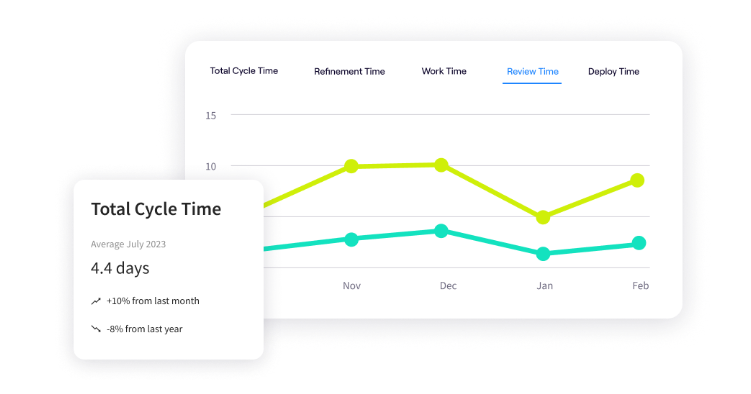
- Track your actual ROI: Measure the direct impact of your DevOps workflows by automatically benchmarking deployment frequency, lead time, and other core DORA metrics.
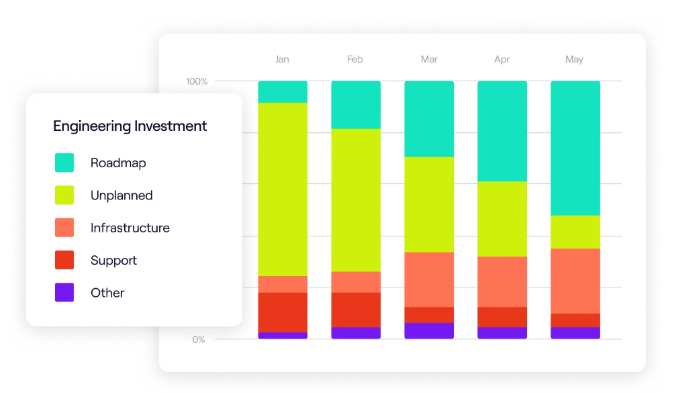
- Map effort to business impact: See exactly how much engineering time is going toward new features versus keeping the lights on, ensuring your team is focused on strategic goals.
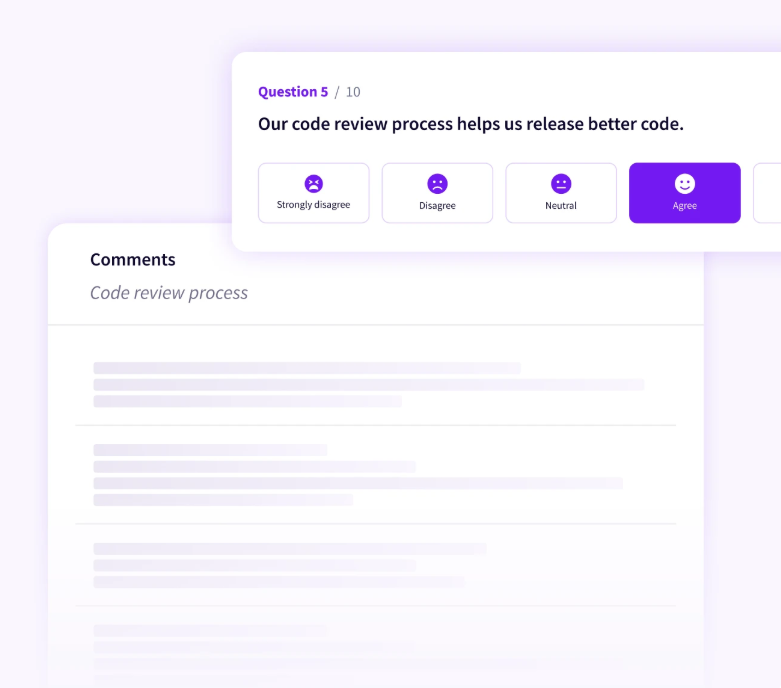
- Spot workflow friction instantly: Combine system data with developer feedback to pinpoint exactly where code gets stuck in the delivery pipeline so you can remove the roadblock.
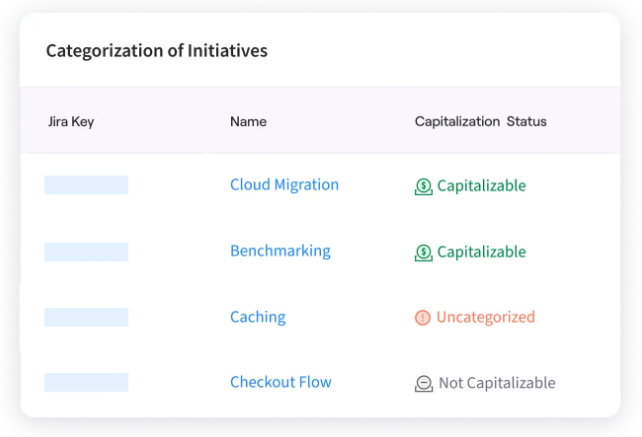
- Take the pain out of capitalization: Use your existing engineering data to automatically generate audit-ready financial reports for software capitalization and R&D tax credits.
Request a demo today to see how Jellyfish brings deep visibility to your DevOps ecosystem.
About the author

Lauren is Senior Product Marketing Director at Jellyfish where she works closely with the product team to bring software engineering intelligence solutions to market. Prior to Jellyfish, Lauren served as Director of Product Marketing at Pluralsight.