In this article
Platform engineering has emerged as one of the most critical disciplines in modern software development. But for engineering leaders, building a platform team presents a unique hiring challenge. It requires a skillset that straddles the line between traditional operations, software engineering, and product management.
Simply renaming your DevOps team isn’t enough. A true platform engineer moves beyond ticket-based support to become a builder of internal products. Their mission is to bridge the gap between complex infrastructure and application development, creating the self-service tools and workflows that allow the rest of the organization to move faster.
This guide breaks down the core responsibilities, essential technical competencies, and the often-overlooked soft skills required to build a high-performing platform engineering team.
Key Responsibilities: What Does a Platform Engineer Do?
Key Responsibilities: What Does a Platform Engineer Do?
While the specific day-to-day tasks can vary wildly between companies, the core mission of a platform engineer remains consistent: to build and maintain the systems that make application developers more efficient.
Unlike traditional operations roles that focus on keeping the lights on, platform engineering roles focus on building internal products. Their responsibilities can be broken down into three main areas.
Designing and Building the Foundation
This is the “infrastructure” part of the job. Platform engineers are responsible for designing the scalable, reliable systems that applications run on.
- Provisioning cloud resources: Managing the lifecycle of resources on cloud platforms like AWS, Azure, or Google Cloud. This involves setting up virtual machines, databases, and storage in a cost-efficient, standardized way.
- Container orchestration: For many organizations, managing Kubernetes is a central responsibility. Platform engineers ensure the cluster is healthy, scalable, and secure so that developers can simply deploy their containers without needing to be K8s experts.
- Disaster recovery & scalability: Ensuring the system can handle traffic spikes and recover from failures automatically.
One engineer on Reddit described this foundational work clearly: “Platform almost never works with developers on product teams, and instead builds and maintains the core infrastructure underlying all teams, like maintaining the kubernetes cluster [and] specifying a standardized way to ship logs.”
Enabling Developers (The Product Side)
This is the differentiator. A platform engineer’s customer is the internal developer. Their job is to remove friction and reduce cognitive load.
- Building the Internal Developer Platform (IDP): Creating and maintaining the central portal or interface where developers interact with the underlying infrastructure.
- Creating golden paths: Developing standardized templates and self-service workflows that allow developers to spin up new services or environments in minutes, not days.
- Automating processes: Using CI/CD pipeline management to automate testing, deployment, and configuration tasks, reducing the manual toil for everyone.
As one Reddit user noted, the shift to platform engineering is about “solving infrastructure problems by coding applications that abstract the infrastructure side of things for developers.” It’s about building tools, not just managing configs.
Ensuring Governance and Reliability
Freedom for developers needs to be balanced with safety for the organization. Platform engineers bake governance directly into the platform.
- Integrating security and compliance: Implementing DevSecOps practices by automating security scans and policy enforcement within the deployment pipeline.
- Monitoring and observability: Providing a centralized stack (like Prometheus or Datadog) that gives developers easy access to logs and metrics, enabling faster troubleshooting and incident resolution.
- Optimizing performance: Continuously tuning the infrastructure to ensure it runs efficiently and cost-effectively.
A helpful analogy from the platform engineering community on Reddit puts it this way: “Devs design/build trains. DevOps is about making trains useful to passengers. Platform engineering is about building railway stations, rail tracks, etc.”
Core Technical Skills (The Hard Skills)
Core Technical Skills (The Hard Skills)
Platform engineering requires a versatile technical toolkit. While no single engineer needs to be an expert in everything, a successful team must collectively master these three domains.
Cloud & Infrastructure Expertise
This is the bedrock of the role. Platform engineers must understand the underlying systems that applications run on to build effective abstractions.
- Cloud computing expertise: Deep familiarity with at least one major cloud provider (AWS, Azure, or Google Cloud) is essential. This goes beyond the basics to include networking (VPCs, DNS, load balancing), storage management (S3, EBS), and identity management (IAM).
- Infrastructure as Code (IaC): You cannot build a scalable platform by clicking around in a console. Proficiency in IaC tools like Terraform, OpenTofu, or Pulumi is critical for automating infrastructure management.
- Linux and networking fundamentals: Understanding how operating systems and networks function is vital for debugging complex issues that abstraction layers can’t hide.
Pro tip: Focus on depth in one cloud provider rather than breadth across all three. The fundamental concepts of cloud infrastructure transfer well, but the deep implementation details are specific.
Containerization & Orchestration
Unlike traditional sysadmins, platform engineers need to understand the specific runtime environment of modern applications.
This requires two distinct hard skills:
- Container orchestration: Expertise in Kubernetes is often the single most requested skill. This includes managing clusters, understanding pod lifecycles, and troubleshooting complex deployment issues.
- Proficiency in coding: Platform engineers build tools, which requires writing code. Proficiency in scripting languages like Go, Bash, Python, or Rust is increasingly important for building CLIs, APIs, and custom controllers.
An engineer who transitioned to the role shared: “I write quite a bit of IaC and tools for build pipelines, but I also write quite a bit of software… we write pretty much everything in TypeScript.”
Continuous Delivery & Observability
If infrastructure is the foundation, automation is the house. Platform engineers must possess the engineering skills to move code safely from a laptop to production and monitor it once it gets there.
- Pipeline engineering: It is not enough to just “use” Jenkins. Platform engineers must be skilled in architecting scalable CI/CD pipelines (using GitHub Actions, Argo Workflows, or GitLab CI) that support hundreds of developers simultaneously.
- Observability engineering: This involves more than looking at dashboards; it requires the technical skill to implement and scale monitoring stacks (Prometheus, Grafana, Datadog) and configure tracing across distributed systems to ensure system reliability.
Trap to avoid: Don’t get locked into a single tool. The specific tool (e.g., Jenkins vs. GitHub Actions) matters less than understanding the principles of immutable infrastructure and continuous delivery. Tools change; the need for reliable automation doesn’t.
The Hidden Differentiators: Product & Soft Skills
Technical expertise is the baseline requirement for a platform engineer, but it is not the predictor of success. The most common reason platform teams fail is not a lack of Kubernetes knowledge; it is a failure to build things that developers actually want.
To succeed, platform engineers must possess a specific set of soft skills that allow them to operate like product owners and consultants.
Product Mindset
This is the most significant shift from a traditional DevOps role. A platform engineer cannot just execute tickets; they must think like a product manager. This involves actively researching their customer (the internal developer) to identify pain points rather than just building interesting technology.
To do this effectively, they need to develop specific product capabilities:
- Internal evangelism: It is not enough to build the tool; engineers must be able to sell it. This requires the communication skills to write compelling documentation, run office hours, and convince development teams to adopt new workflows voluntarily.
- User research: The ability to conduct interviews and map out the SDLC to find where developers experience friction is just as valuable as writing code. Without this, engineers often build solutions for problems that don’t exist.
As one engineer on Reddit put it, the title matters less than the mindset: “When you realise you have to build a product and it has to be useful and easy to use – you’ve got yourself a platform and can call yourself a platform engineer if you want.”
Empathy & Communication
Platform engineers sit at the intersection of multiple teams—Operations team, Security, Development, and Leadership. Success requires the ability to translate between these groups using specific interpersonal skills:
- Cross-domain communication: The ability to articulate complex infrastructure constraints to application developers in a way that relates to their workflow, and conversely, to communicate developer friction points to leadership in terms of business impact.
- Diplomacy: Platform engineers often face conflicting requests, such as developers wanting speed while security wants strict control. A skilled engineer uses negotiation to find a solution that satisfies both parties without blocking progress.
Trap to avoid: The Ivory Tower syndrome. Engineers who build in isolation often over-engineer solutions that are technically impressive but practically unusable. Empathy for the end-user’s daily workflow is the antidote to over-engineering.
Project Management & Prioritization
Platform teams are often small groups serving a large organization. Without strong project management skills, they can easily drown in support requests and never make progress on strategic initiatives.
- Scope discipline: The ability to define clear goals and—crucially—say no to one-off customizations that don’t fit the platform’s long-term vision.
- Stakeholder management: Managing expectations is key. Platform engineers must be able to communicate realistic timelines to product teams and explain why certain features are prioritized over others.
Pro tip: Look for engineers who can balance keeping the lights on (KTLO) with long-term feature development. They should be able to articulate why they are working on a specific task and how it aligns with the broader engineering roadmap.
Adaptability & Continuous Learning
The cloud-native landscape changes faster than almost any other part of tech. New tools, frameworks, and best practices emerge monthly. A platform engineer must be a learning machine, utilizing specific cognitive approaches to stay ahead:
- Systems thinking: It is not enough to just learn a new tool; engineers need the ability to see how that tool fits into the complex, interconnected system of the entire organization and what ripple effects it might cause.
- Paradigm shifting: The ability to unlearn old habits (like manual scripting) and embrace new abstractions (like APIs and self-service) is critical.
One manager on Reddit described the difficulty of this mental shift: “It’s not easy, it’s not fast, and it requires a mind shift as a terraform solution and a helm chart doesn’t cut it. This requires an API, such as the APIs that we get from a cloud provider, to manage these resources in an abstract way.”
Building a Balanced Platform Engineering Team
Building a Balanced Platform Engineering Team
Reviewing this comprehensive list of skills—from Kubernetes proficiency to product management—it might seem like you need to hire a unicorn. The reality is that finding a single individual who possesses every one of these capabilities is nearly impossible.
Successful platform teams are not built by hunting for superhumans; they are built by hiring for complementary strengths. You need to assemble a portfolio of skills across different individuals.
- Infrastructure specialists: These are your deep experts in networking, cloud primitives, and container orchestration. They ensure the foundation is solid, secure, and scalable.
- Software engineers: You need builders who treat infrastructure as software. These engineers excel at writing automation, building CLIs, and developing the internal APIs that glue the platform together.
- Product-minded generalists: These are the engineers who excel at user empathy, documentation, and internal evangelism. They bridge the gap between the platform and the application developers.
For smaller organizations, you do not need to build every capability in-house. Leverage managed services or platform engineering partners (PEaaS) to handle the undifferentiated heavy lifting—like 24/7 cluster management—so your core team can focus on the high-value work of improving the developer experience.
Give Your Platform Team the Intelligence They Need
Give Your Platform Team the Intelligence They Need
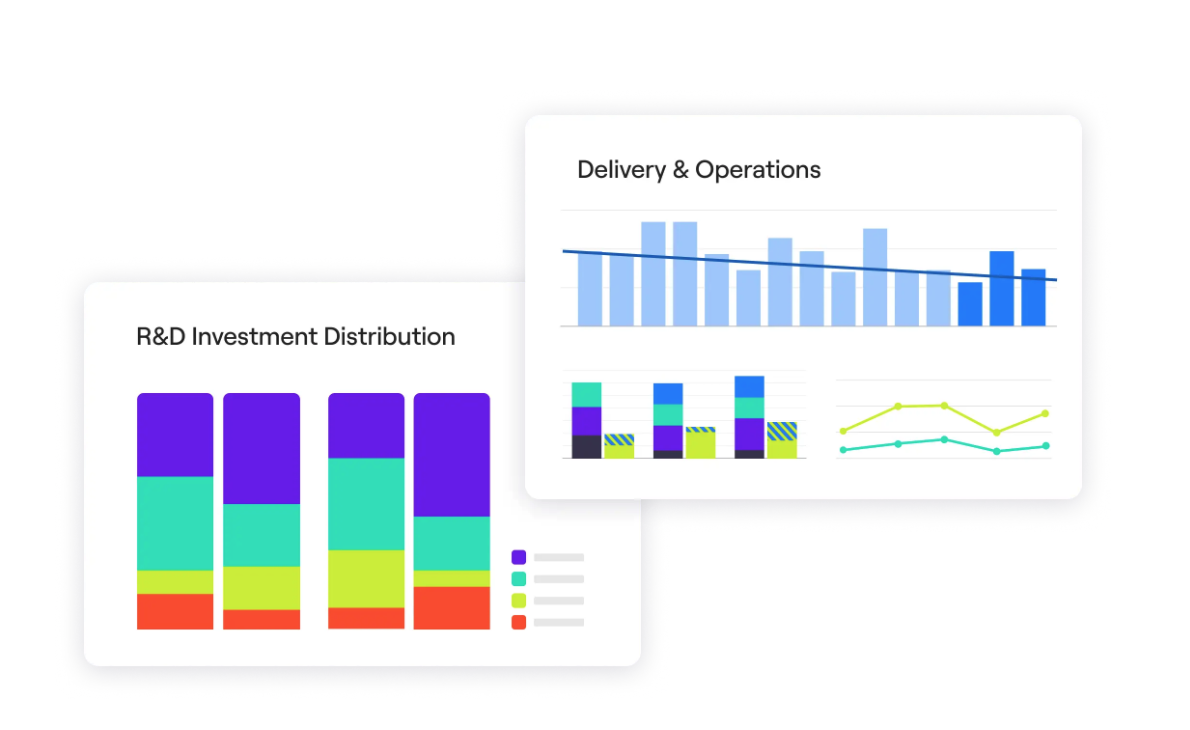
You’ve hired a team of talented engineers with a unique blend of infrastructure, product, and soft skills. But even the most skilled platform team can fail if their work isn’t connected to the broader organization. To succeed, leaders need to understand where they are now and where they need to go.
Jellyfish provides the Engineering Management Platform that helps you maximize the impact of your platform engineering investment.
- Business alignment: Ensure your platform engineers aren’t just building technology for its own sake. Jellyfish helps you focus engineering resources on what really matters, ensuring platform initiatives support your top strategic goals.
- Engineering & product operations: Platform teams exist to remove friction. Jellyfish helps you identify and address inefficiencies quickly, spotting the bottlenecks in your development process that your platform team needs to solve next.
- Software delivery management: Platform rollouts are complex projects. Jellyfish gives you the visibility to make sure these critical initiatives are delivered on time and on budget, allowing you to communicate progress clearly to executives.
- Team health: Platform engineering is a high-demand role that sits between multiple stakeholders. Jellyfish helps your teams work better together, providing the insights needed to prevent burnout and foster a collaborative, sustainable culture.
Check out how Jellyfish helps teams work better, feel more confident, and achieve better results. Book a demo today.
FAQs
FAQs
What is the difference between a Platform Engineer and a Site Reliability Engineer (SRE)?
While they share similar technical skills, their focus differs. A site reliability engineer (SRE) focuses on the reliability, uptime, and performance of production workloads, often applying strict methodologies to manage operational risk. In contrast, platform engineers work to build the internal products that streamline the development experience for other engineers.
How does platform engineering relate to existing DevOps practices?
Platform engineering evolves DevOps practices by centralizing and standardizing them. By managing continuous integration pipelines and cloud services (from providers like AWS or Microsoft Azure), the platform team ensures continuous improvement in delivery speed, reliability, and security across the organization.
How important are certifications compared to hands-on experience for platform engineers?
While certifications can validate your knowledge of new technologies and cloud platforms, hands-on experience is often more valuable. Hiring managers prioritize candidates who demonstrate practical problem-solving skills and have a track record of optimizing real-world deployment processes over those who simply hold paper credentials.
Learn More About Platform Engineering
Learn More About Platform Engineering
- The Complete Guide to Platform Engineering
- Platform as a Product: The Foundation for Successful Platform Engineering
- When to Adopt Platform Engineering: 8 Signs Your Team is Ready
- Platform Engineering vs. DevOps: What’s the Difference?
- How to Build a Platform Engineering Team: Key Roles, Structure, and Strategy
- Understanding The Platform Engineering Maturity Model
- How to Build Golden Paths Your Developers Will Actually Use
- Best 14 Platform Engineering Tools Heading Into 2026
- 8 Benefits of Platform Engineering for Software Development Teams
- 17 Platform Engineering Metrics to Measure Success and ROI
- 9 Platform Engineering Anti-Patterns That Kill Adoption
- 11 Platform Engineering Best Practices for Building a Scalable IDP
- What is an Internal Developer Platform (IDP)?
About the author

Lauren is Senior Product Marketing Director at Jellyfish where she works closely with the product team to bring software engineering intelligence solutions to market. Prior to Jellyfish, Lauren served as Director of Product Marketing at Pluralsight.