In this article
Platform engineering has rapidly shifted from a niche trend to a strategic necessity for scaling organizations. But buying the tools or deploying a portal is the easy part. The hard part is building a platform that actually delivers on its promise: reducing cognitive load and accelerating software delivery.
Too many platform initiatives stall because they fall into the “build it and they will come” trap. They focus entirely on the technology stack while neglecting the culture, processes, and product management required to drive adoption.
Success requires more than just Kubernetes and code; it requires a disciplined approach. This guide outlines 12 platform engineering best practices—spanning strategy, technical implementation, and culture—to help you build a scalable Internal Developer Platform (IDP) that your developers will actually want to use.
Best Practices on Strategy and Design Principles
Best Practices on Strategy and Design Principles
Before writing a single line of infrastructure code, successful platform teams must establish a clear strategic foundation. The biggest risk in platform engineering isn’t technical failure; it’s building the wrong thing.
To avoid building a “ghost town”—a platform that no one uses—you must treat your platform as a product, not an IT project. Here are the core design principles to guide your strategy.
1. Adopt a Product Mindset (Treat Developers as Customers)
The most fundamental best practice is to shift your thinking from “mandating tools” to “solving problems.” Your developers are your customers, and your platform must compete for their time and attention.
If you build a platform in a vacuum, based on what you think the organization needs, you will likely fail. Instead, start with user research. Identify the friction points in the current developer workflow and build solutions that directly address them.
As one Head of Platform advised on Reddit: “Don’t start designing the system until you understand how people work. Start by gathering information on pain points and people’s workflow, and go from there.”
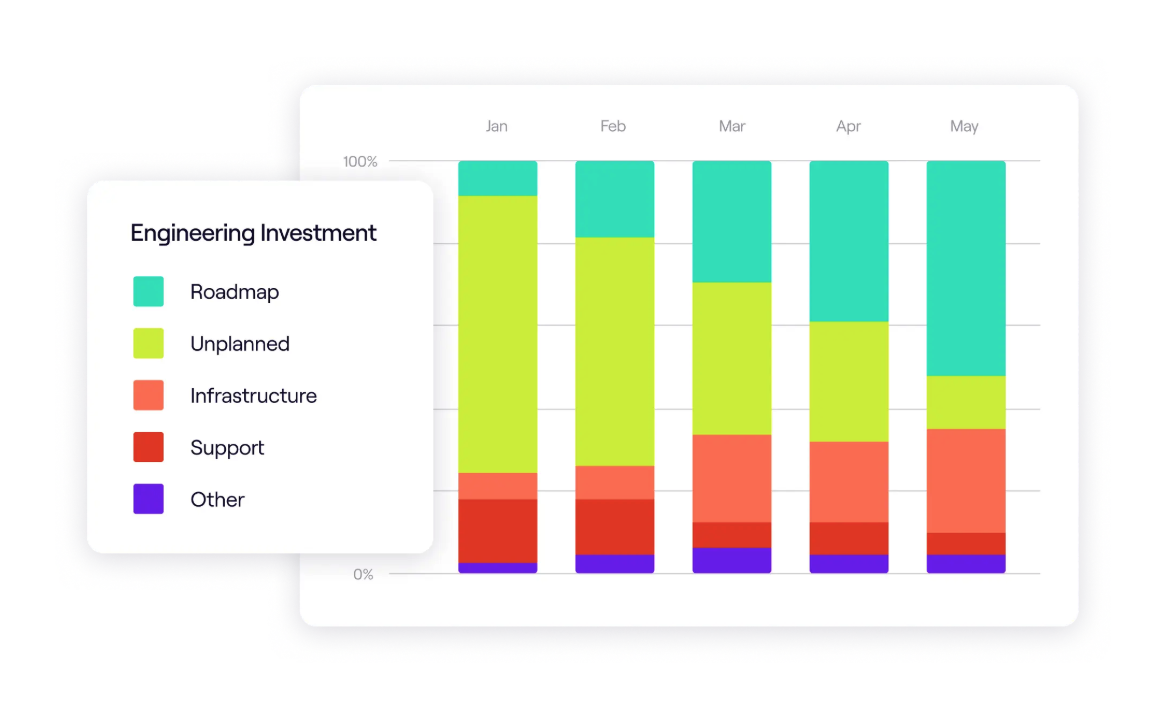
💡Jellyfish Insight: To truly treat your platform as a product, you need to measure its business value. Use Jellyfish to track how platform improvements optimize engineering allocation, ensuring teams focus on innovation rather than just maintaining complex microservices or managing upstream dependencies. This visibility is crucial for proving the scalability of your platform strategy.
2. Design for Self-Service First
The ultimate goal of a platform is to eliminate TicketOps —the anti-pattern where developers must wait for an operations team to provision infrastructure or deploy code.
Your platform should enable true self-service. This means building golden paths—curated, supported workflows—that allow developers to provision resources (like databases or test environments) and deploy code without human intervention. However, this doesn’t mean simply giving them a raw AWS console; it means providing a simplified interface (an Internal Developer Portal) that abstracts the complexity while enforcing best practices.
A DevOps engineer described the value of this approach perfectly: “Platform engineering is great for providing technically complex solutions (incorporating best practices) to common problems in a simple format.”
Trap to avoid: Don’t confuse self-service capabilities with unlimited access. Providing a button that spins up an expensive, unmanaged cluster isn’t helpful; it’s dangerous. Good self-service includes baked-in guardrails (such as access controls, budget limits, and security policies) that keep developers safe by default.
3. Keep it Cloud-Native and Extensible
A common pitfall is trying to build a platform that abstracts everything, creating a rigid black box that limits power users.
Best practice dictates that you build your platform on open, cloud-native standards (like Kubernetes) and ensure it remains extensible. You should aim to solve the 80% use case with your golden paths, but allow the remaining 20% of power users to “eject” from the abstraction and access the underlying infrastructure when necessary.
One platform engineer warns against over-scoping: “You cannot build a platform that does everything… Identify a common problem that multiple teams face but are unwilling to solve or maintain… [and] propose a standardized solution.”
By keeping the platform open and extensible, you ensure that it remains a helpful accelerator rather than a bottleneck that developers have to fight against.
Technical Implementation Best Practices
Technical Implementation Best Practices
Once the strategy is set, the focus shifts to execution. A platform is only as good as its technical foundation. These best practices ensure that the platform you build is scalable, secure, and maintainable for the long haul.
4. Automate Everything (The Day 2 Mindset)
It’s easy to focus on Day 1 automation—spinning up a new environment or deploying an app. But the real cost of a platform lies in Day 2 operations: patching, scaling, maintenance, and recovery.
Best practice dictates that Infrastructure as Code (IaC) should be the non-negotiable foundation of your platform. Treat your infrastructure configuration with the same rigor as application code: version it, test it, and review it.
Pro tip: Automate repetitive tasks that drain engineering time. Your platform should handle health checks, vulnerability scanning, and environment teardowns automatically. As the general rule of platform engineering goes: if you do it twice, automate it.
5. Embed Security and Compliance by Design
Security cannot be an afterthought or a manual gate at the end of the release process. In a mature platform, security is shifted left and baked directly into the infrastructure templates.
Instead of blocking developers with manual reviews, use automated guardrails. For example, allow developers to provision an S3 bucket via the platform, but have a baked-in policy that automatically blocks public access and enforces encryption. This allows for speed without compromising safety.
Trap to avoid: Avoid treating security as a rigid gatekeeper that halts the development process. One Reddit user put it perfectly: “It is not a case of saying no, it’s all about working together to say yes in a safe and secure manner to move the project forward.”
Use policy-as-code tools (like OPA or Sentinel) to provide immediate, automated feedback to developers inside their PRs, rather than waiting for a security audit.
6. Make Everything Visible (Observability)
A common failure mode is building a platform that deploys code beautifully but leaves developers blind when something breaks in production.
Best practice is to ensure that observability—logging, metrics, and tracing—is a standard, pre-configured part of every golden path. When a developer spins up a new service, they should immediately get a dashboard showing their service’s health, without having to configure agents or write query languages.
Pro tip: Centralize your observability to prevent firefighting. A Head of Platform advised on Reddit to: “Catch issues (not just necessarily outages/degradations) before it becomes fire. Get it centralized if possible. VictoriaMetrics or Grafana Mimir are very cheap to host on your own…”
Best Practices on Culture and Collaboration
Best Practices on Culture and Collaboration
An internal platform is not just a technical layer; it is a social contract between the platform engineering team and the developers. If the culture is adversarial or transactional (“file a ticket and wait”), adoption will fail. These best practices focus on building the trust and collaboration required to drive voluntary adoption.
7. Foster a Culture of Collaboration and Empathy
Historically, Operations teams (focused on stability) and Development teams (focused on speed) have been at odds. A platform engineering team must bridge this divide, not reinforce it.
Best practice is to prioritize empathy over mandates. Platform engineers should actively seek to understand the daily reality of application developers. A powerful way to do this is through shadowing sessions, where a platform engineer watches a developer work to identify friction points that tools alone won’t reveal.
Pro tip: Don’t just guess what developers need based on tickets. Go to the source. As one engineering leader advised on Reddit: “Sit down with each dev and politely ask for a complete workflow demo. Document every custom script that they wrote… Then you decide if you want cloud or on-prem.”
8. Invest in Education and Golden Paths
A tool is useless if no one knows how to use it. Self-service doesn’t mean “figure it out yourself.” You must treat enablement as a core deliverable of the platform team.
Instead of writing static documentation, create interactive golden paths—step-by-step tutorials that guide developers through a specific task (e.g., Deploying a Service to Production) using the platform. This ensures that the “right way” is also the “easiest way” to learn.
Related reading → CTO Toolbox: 22 Resources For Building Great Engineering Teams
💡Jellyfish Insight: Is your platform actually speeding up onboarding? Track the time-to-first-commit for new hires using Jellyfish. Ensure that your Docker templates and internal APIs are reducing the learning curve and preventing the configuration errors that lead to expensive downtime.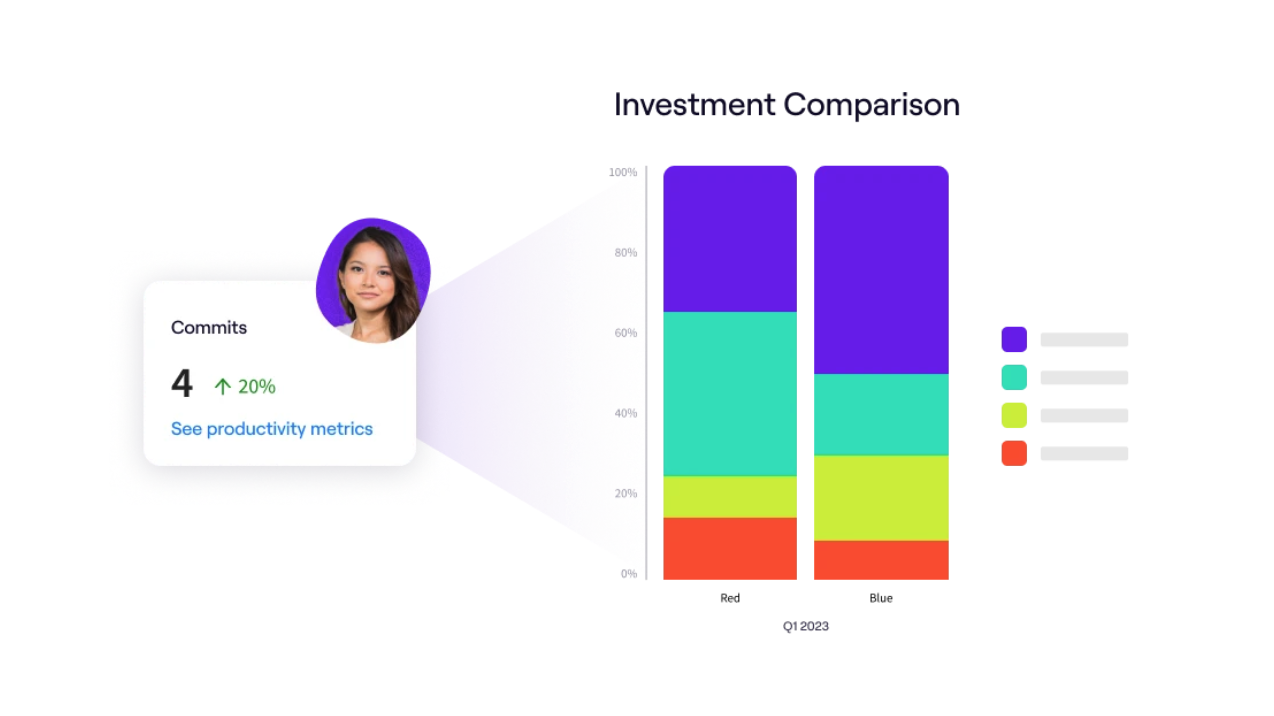
9. Establish Tight Feedback Loops
You cannot build a successful product in a vacuum. You need continuous, honest feedback from your “customers” to know if you are solving the right problems or just introducing new abstractions they hate.
To do this, implement formal feedback loops to measure sentiment. This goes beyond ticket volume. Use developer experience surveys to gauge satisfaction and hold regular “office hours” where developers can ask questions without filing tickets.
As one Reddit user advised: “Run a regular survey with your customers, aka devs and stakeholders, and understand their pain points. Figure out what is most important to the firm (delivery, costs, stability, etc) and prioritise accordingly.”
Governance and Measurement Best Practices
Governance and Measurement Best Practices
A platform isn’t just a technical enabler; it’s a governance tool. It allows engineering leaders to manage costs, define ownership, and measure progress at scale without resorting to micromanagement.
10. Track and Control Costs (Without Blocking)
Cloud infrastructure costs can grow exponentially in a self-service model if left unchecked. The goal of platform engineering is to democratize access to resources, but that freedom must come with financial visibility.
Best practice is to build cost awareness directly into the platform. Instead of restricting access, provide developers with real-time visibility into the cost of the resources they are spinning up. Use automation to “right-size” resources and clean up unused environments.
💡Pro tip: Make cost a constraint from day one. A Reddit user sharing advice for early platform engineers noted the importance of this constraints-based approach: “Try to make a note of costs and billing as your constraint. You don’t want management to get back at you for an over-provisioned resource.”
11. Define Clear Roles and Responsibilities
As you transition to a platform model, the biggest source of friction is often ambiguity. Who is responsible when a database goes down—the platform team who provided the database instance, or the application team using it?
Best practice requires establishing a clear shared responsibility model.
- The platform team owns the means of production (the Kubernetes cluster, the CI/CD pipeline availability, the Terraform modules).
- The application team owns the output (the application code, the specific configuration of their service, and their on-call rotation).
Trap to avoid: Don’t let the platform team become the catch-all support desk for every technical issue. If the platform team is debugging application logic, the model is broken. Documenting these boundaries explicitly (e.g., in an internal Service Level Agreement) prevents the platform team from becoming a bottleneck.
From Best Practices to Business Impact with Jellyfish
From Best Practices to Business Impact with Jellyfish
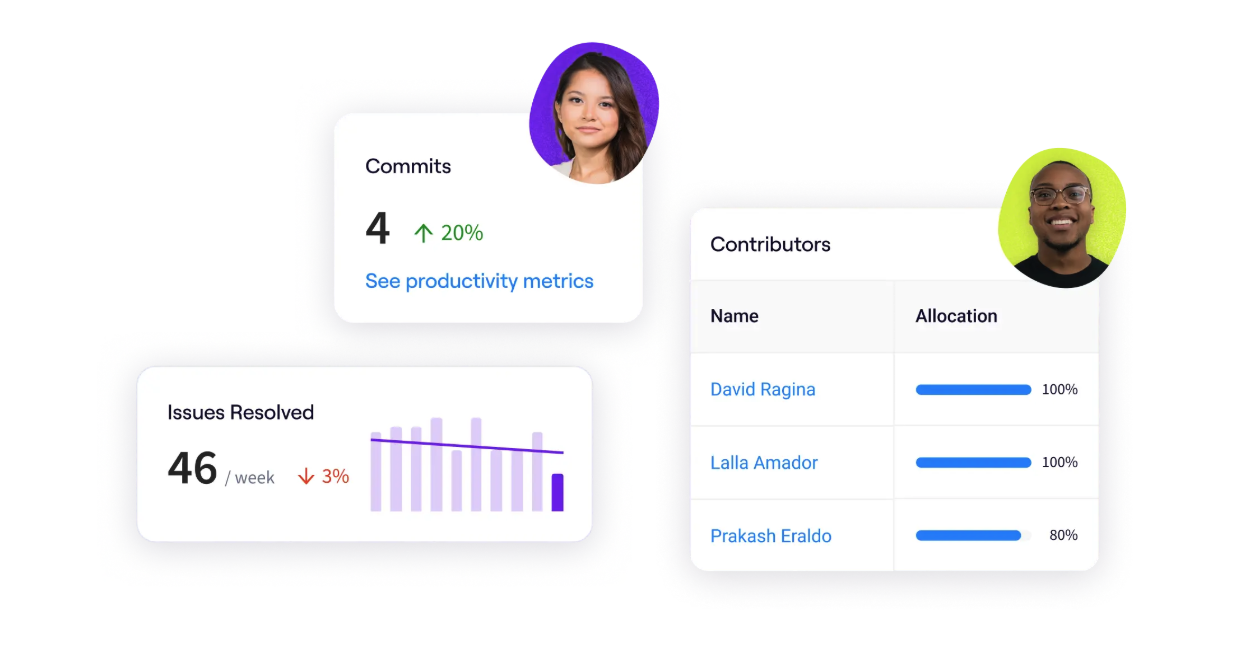
Implementing these best practices is a significant undertaking. It requires shifting culture, adopting new technologies, and changing how your teams work. But for engineering leaders, the hardest part often isn’t building the platform—it’s proving that the platform is actually working.
How do you know if your self-service initiatives are truly reducing toil? How can you confirm that embedding security hasn’t slowed down your delivery speed?
Jellyfish is the engineering management platform that provides the visibility you need to answer these questions. We help you connect your platform engineering efforts to real-world engineering outcomes.
With Jellyfish, you can:
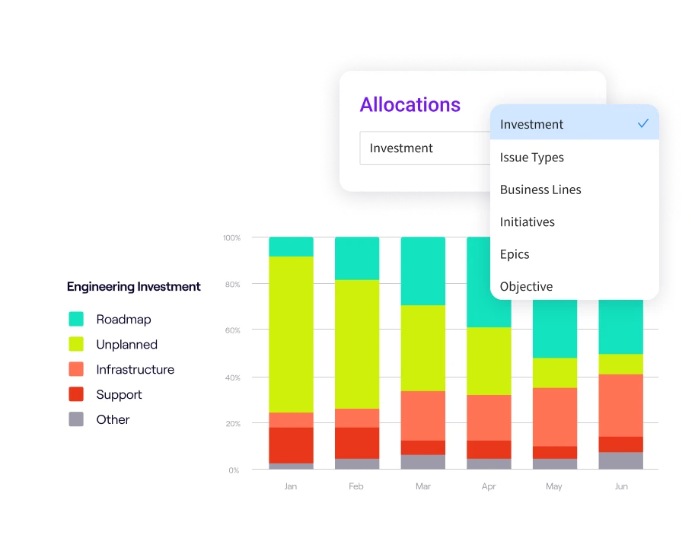
- Validate the reduction in toil: Use resource allocation data to prove that your platform is working. You should see a measurable shift in engineering effort away from Infrastructure/Support and toward Product Roadmap work as your golden paths are adopted.
- Measure the velocity gain: Don’t just rely on anecdotes. Track core DORA metrics like Cycle Time and Deployment Frequency across your organization. Show stakeholders a clear before-and-after picture of how your platform is accelerating delivery.
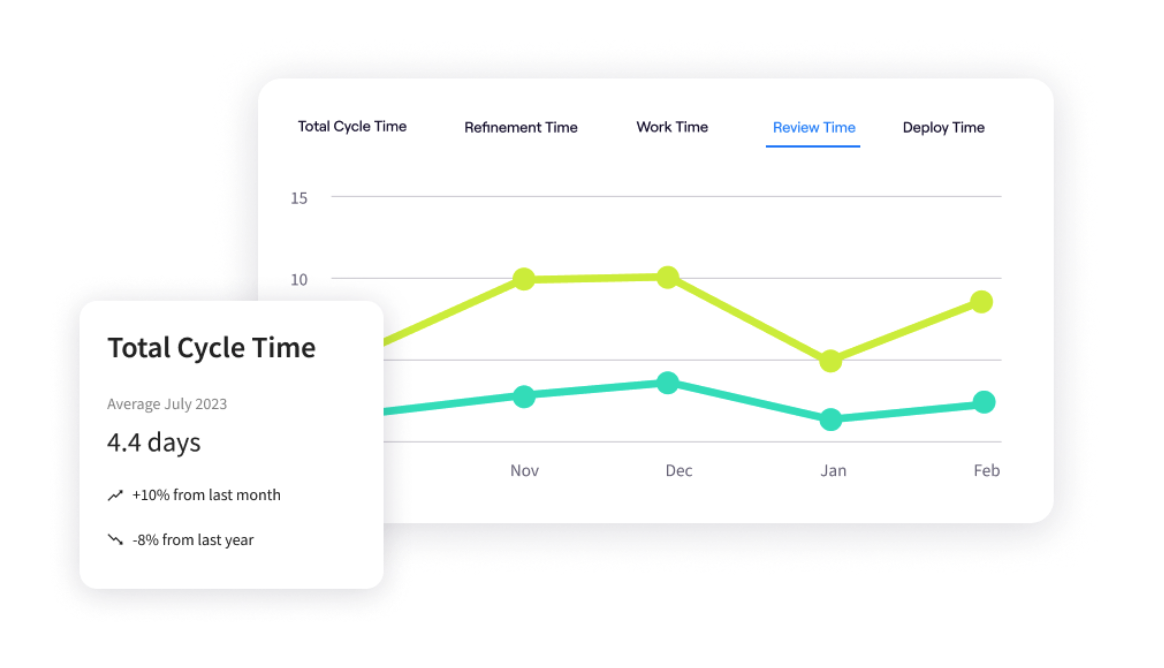
- Guide your platform roadmap: Jellyfish provides the data-driven feedback loop you need to treat your platform as a product. Identify which teams are still bogged down by friction and use that data to prioritize the next set of features or automations your platform team needs to build.
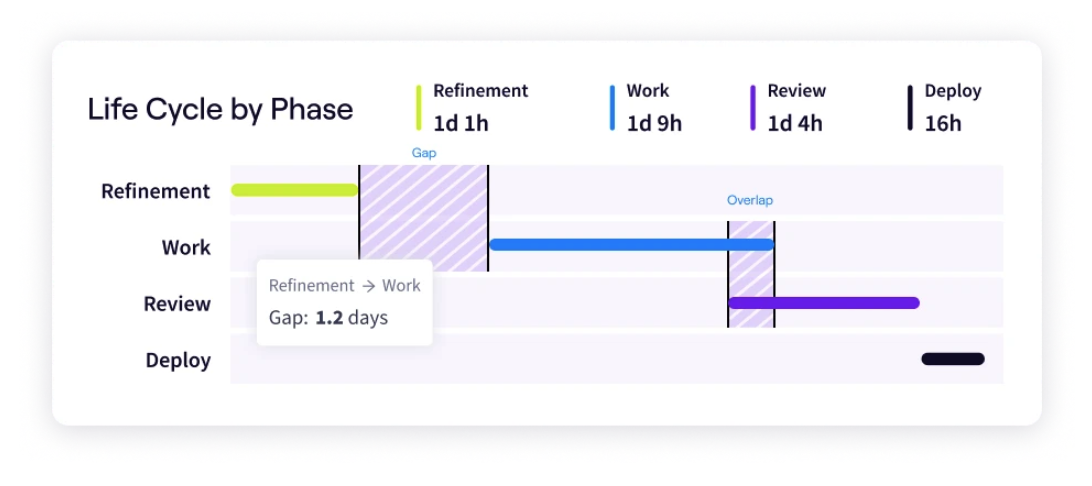
Build your platform with confidence, backed by data. Request a demo of Jellyfish today.
FAQs
FAQs
How do we balance standardization with developer freedom?
The goal is to create golden paths, not golden cages. Standardization should represent the path of least resistance—the easiest, fastest way to ship code. However, the platform must remain extensible. Allow developers to eject from the standard path when they have unique requirements, provided they accept the responsibility for managing the extra complexity and troubleshooting themselves.
How often should we update our platform roadmap?
Treat your platform as a product, which means the roadmap is never “done.” You should review and update it at least quarterly based on user feedback and changing business needs. Successful platform engineering teams constantly iterate on their roadmap to ensure they are solving the most current bottlenecks and delivering continuous value to their internal customers.
How does platform engineering improve the overall software development lifecycle?
Platform engineering helps streamline the development lifecycle by providing self-service tools and reusable templates. This reduces friction for developers, significantly boosting developer productivity and enhancing the overall developer experience.
Which tools are essential for infrastructure management?
Effective infrastructure management relies on Infrastructure as Code (IaC). Teams often use tools like Terraform, CloudFormation, or Pulumi to define resources across cloud platforms like Azure and Google Cloud. This ensures consistency and allows for proper version control of infrastructure alongside application code in GitHub.
Is platform engineering different from traditional software engineering?
Platform engineering is a specialized form of software engineering. It treats the internal platform as a software product, often leveraging open-source components to build a cohesive system. The goal is to apply engineering discipline to operations, ensuring that the software development process is fast, reliable, and secure.
Learn More About Platform Engineering
Learn More About Platform Engineering
- The Complete Guide to Platform Engineering
- Platform as a Product: The Foundation for Successful Platform Engineering
- When to Adopt Platform Engineering: 8 Signs Your Team is Ready
- Platform Engineering vs. DevOps: What’s the Difference?
- How to Build a Platform Engineering Team: Key Roles, Structure, and Strategy
- Understanding The Platform Engineering Maturity Model
- How to Build Golden Paths Your Developers Will Actually Use
- Best 14 Platform Engineering Tools Heading Into 2026
- 8 Benefits of Platform Engineering for Software Development Teams
- 17 Platform Engineering Metrics to Measure Success and ROI
- 9 Platform Engineering Anti-Patterns That Kill Adoption
- The Top Platform Engineering Skills Every Engineering Leader Must Master
- What is an Internal Developer Platform (IDP)?
About the author

Lauren is Senior Product Marketing Director at Jellyfish where she works closely with the product team to bring software engineering intelligence solutions to market. Prior to Jellyfish, Lauren served as Director of Product Marketing at Pluralsight.