In this article
Google “DevOps vs. platform engineering” and you’ll immediately hit posts like this:
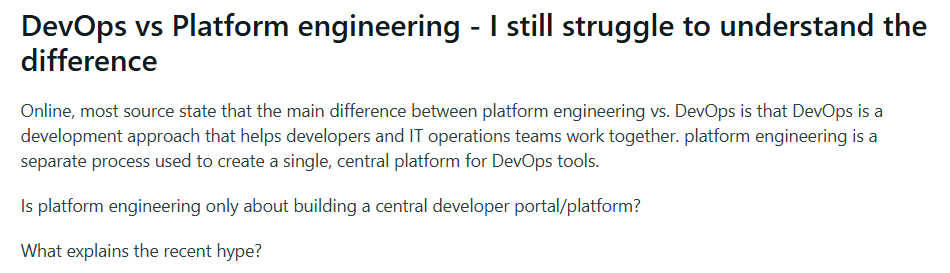
Engineers read multiple explanations that contradict each other. Platform engineering is either a natural DevOps evolution, a separate discipline entirely, or just DevOps done right.
If you adopted DevOps practices but still see developers waiting days for infrastructure access and ops teams drowning in tickets, you’re not alone. Many organizations find that DevOps handles collaboration problems, but leaves gaps at scale.
This guide breaks down what separates these two approaches in practice, explains the relationship between them, and helps you determine which direction makes sense for your team.
What is DevOps?
What is DevOps?
The DevOps term first arrived in 2009 when Patrick Debois organized the first “DevOpsDays” conference in Belgium. He saw what most software teams already knew.
Developers created code without understanding deployment challenges, while operations teams deployed software they hadn’t built. Release cycles stretched for months, and when production systems failed, teams blamed each other.
The initiative didn’t stay static. Over the next decade, DevOps evolved from a conference conversation into a mature discipline with defined practices and widespread adoption.
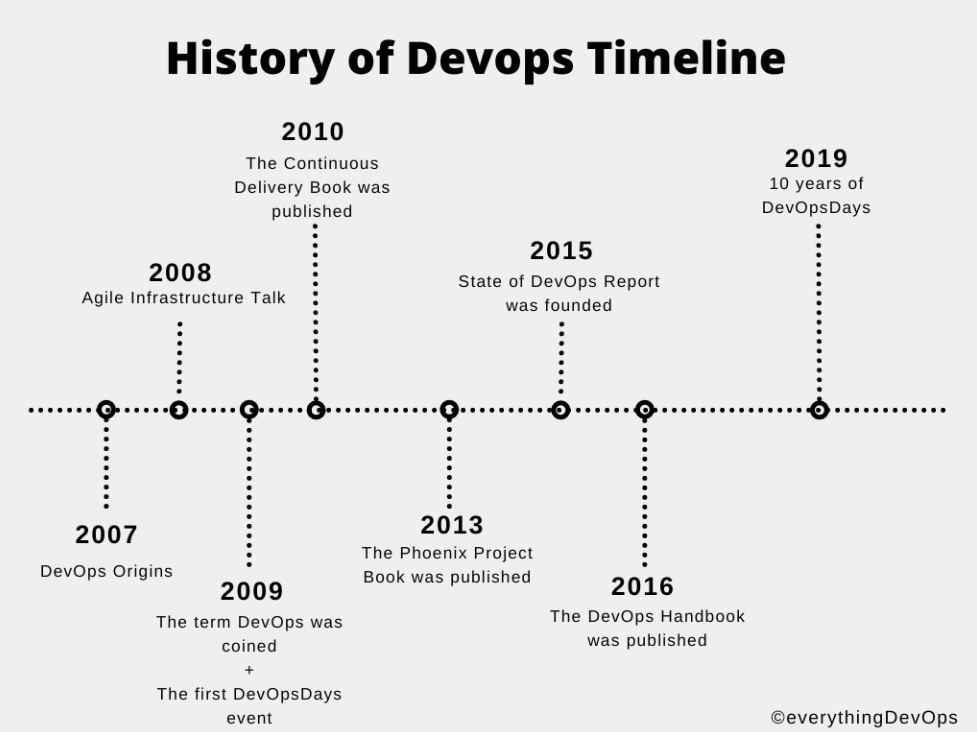
(Source: EverythingDevOps)
The main goal was to get the development and operations teams working together. Donovan Brown, a principal DevOps manager at Microsoft, offered one of the most widely-cited definitions: “DevOps is the union of people, process, and products to enable continuous delivery of value to our end users.”
The on-the-ground objective is a bit clearer. Practitioners translated the philosophy into what they needed from DevOps in practice. Here’s how this Reddit user explained it:

To achieve this, DevOps introduced core principles that changed team structure and workflow:
- Collaboration: Developers and operations work together as one team instead of throwing work over departmental walls.
- Automation: Repetitive tasks get automated across the entire pipeline so teams can spend time on work that needs human judgment.
- Shared responsibility: Development teams maintain accountability for their code in production, and embody the “you build it, you run it” philosophy.
These principles became standard practices. Teams built CI/CD pipelines that automated the path from code to production, while infrastructure as code (IaC) let them define and manage infrastructure through version-controlled files.
And the cultural change mattered as much as the tools. DevOps removed the barriers between development and operations, made both teams responsible for uptime, and forced engineers to consider the entire lifecycle of their code.
What is Platform Engineering?
What is Platform Engineering?
Platform engineering builds and maintains internal tools that help developers ship code faster. Platform teams create self-service infrastructure and standardized workflows so developers don’t have to file tickets or learn complex deployment systems themselves.
The phrase sounds like another tech buzzword, but engineers who practice it describe something more concrete. Here’s how this Reddit user put it:

This product mindset is what separates platform engineering from traditional infrastructure work. Platform teams treat developers as customers and build tools that those customers want to use.
The need for platform engineering became clear as DevOps engineer teams grew. Developers drowned in infrastructure complexity while teams built inconsistent solutions to the same problems.
Platform engineering teams respond by building internal developer platforms (IDPs) that manage these specific pain points. An IDP gives developers infrastructure capabilities through simple interfaces they can use independently:
- Self-service portals: Web interfaces or CLI tools where developers can provision environments, deploy cloud-native applications, or request resources without filing tickets.
- Golden paths: Pre-configured, vetted workflows for common tasks like deploying a new service, setting up a database, or implementing observability.
- Abstraction layers: Platform engineering tools and APIs that hide infrastructure complexity (whether managing Kubernetes clusters, Terraform configurations, or AWS resources) but still let developers customize when necessary.
- Documentation and templates: Clear documentation and ready-to-use templates that make it easy to follow best practices.
Platform team structure varies based on company size and complexity. For example, larger organizations usually build dedicated platform engineering teams that focus entirely on the internal developer platform.
These teams typically include:
- Platform engineers who build self-service tools and APIs
- Site reliability engineers who maintain platform uptime and performance
- Developer experience specialists who streamline how developers interact with the platform
- Technical writers who document functions and write implementation guides
Smaller organizations typically spread platform responsibilities across current teams or assign one or two engineers to work on platform tools part-time.
How are Platform Engineering and DevOps Different?
How are Platform Engineering and DevOps Different?
The confusion around platform engineering and DevOps makes sense given how much common ground they share. Both care about automation, both focus on faster deployments, and both want to increase developer productivity.
But they approach these goals from different angles.
The main difference is that DevOps is primarily a philosophy and set of cultural practices that changed how development and operations teams collaborate.
Platform engineering, on the other hand, is an engineering discipline that’s focused on building internal products that make DevOps principles easier to implement at scale.
DevOps engineers focus on orchestration and automation for specific products, while platform engineers create reusable infrastructure that supports the entire software development lifecycle across multiple teams.
One engineer on Reddit summarized the difference in scope well:

The differences are clearer when you compare them side by side across these key dimensions.
| Dimension | DevOps | Platform engineering |
| What it is | Cultural philosophy and a set of practices | Engineering discipline and technical implementation |
| Primary goal | Optimize collaboration between dev and ops; secure faster, more reliable software delivery | Build internal tools that reduce cognitive load, provide self-service platforms, and bring scalability across growing engineering teams |
| Nature of work | Cultural change, process improvement, mindset change | Product development process, infrastructure building, and tool creation |
| Who does the work | All engineers share responsibility; DevOps is everyone’s job | Specialized platform teams build and maintain tools for other teams |
| Organizational scope | Organization-wide culture and methodology that every team adopts | Centralized team creates capabilities that multiple teams use |
| Main deliverables | Cultural practices, workflows, shared ownership models, CI/CD adoption | Internal developer platforms, self-service developer portals, golden paths, APIs, templates |
| Target users/customers | End customers benefit indirectly through better application development and software delivery | Internal developers and software engineering teams directly |
| Team structure | Cross-functional product teams own the full lifecycle of their services | Centralized platform team serves multiple product teams |
| Success metrics | DORA metrics (deployment frequency, lead time, change failure rate, MTTR) | Developer satisfaction scores, platform adoption rates, time to first deployment, ticket reduction, and onboarding time |
| Approach to tools | Teams choose and manage their own DevOps tools within set principles | The platform team provides standardized and curated tooling |
| Relationship to infrastructure | Teams manage their own infrastructure using IaC and automation | Platform hides infrastructure complexity behind self-service interfaces |
Platform engineering doesn’t replace DevOps. The approach helps DevOps principles work on a larger scale.
Teams still follow DevOps principles, but platform engineering handles infrastructure complexity centrally, so developers spend more time on product work.
What Is the Difference Between DevOps, Site Reliability Engineering (SRE), and Platform Engineering?
What Is the Difference Between DevOps, Site Reliability Engineering (SRE), and Platform Engineering?
SRE implements DevOps principles through specific practices and metrics. While DevOps offers a philosophy around collaboration and shared ownership, SRE provides concrete techniques like SLOs, error budgets, and toil measurement.
Google’s VP of Engineering, Ben Treynor, famously said that “class SRE implements DevOps” – meaning SRE is one way to practice DevOps philosophy.
Platform engineering operates at a different level. While SREs focus on keeping particular systems reliable and available, platform engineers create the infrastructure and tools that make everyone’s work easier (including SRE teams).
One engineer on Reddit described the difference in simple terms:

The clearest way to see how they differ is to look at what drives each one and the core problems they handle:
| Primary concern | Core question | Success looks like | |
| DevOps | Culture & collaboration | “How do we get development and IT operations to work together and ship software faster?” | Teams deploy frequently, share responsibility for production, and take care of issues quickly through collaboration |
| SRE | Reliability & performance | “How do we apply engineering principles to operations and keep systems reliable at scale?” | Services meet uptime targets, incidents get resolved fast, and teams spend less time on manual operational work |
| Platform Eng. | Developer experience & efficiency | “How do we build self-service infrastructure that makes developers productive and reduces cognitive load?” | Developers provision resources independently, deploy without tickets, and spend more time on features than infrastructure management |
Many companies combine all three approaches. DevOps provides the cultural principles, SREs focus on reliability for key systems, and platform engineers create the infrastructure and tools both groups need.
For example, here’s how a typical organization might use all three together:
- Product teams practice DevOps by owning their code in production and deploying multiple times per day.
- Platform teams build the deployment pipelines, observability tools, and infrastructure APIs that product teams rely on.
- SRE teams concentrate on the most important services, define reliability standards through SLOs, and handle major incidents.
Each group brings different expertise and solves different problems, but they work together to make the entire engineering organization run better.
How Jellyfish Can Help
How Jellyfish Can Help
Understanding the difference between DevOps and platform engineering is step one. Measuring their impact is step two.
Whether you follow DevOps principles or build a platform team, you need to see what improves productivity, where friction exists, and whether your approach makes teams faster.
This is where Jellyfish helps engineering leaders make informed decisions.
Jellyfish is an engineering management platform that analyzes signals from tools you already use (GitHub, Jira, CI/CD systems) to give you a clear picture of engineering performance.
- Get a clearer picture of resource allocation: Jellyfish automatically tracks how engineering capacity splits across different work types without timecards or manual reporting. You can see which teams get pulled into too much reactive work and need more focus time for platform improvements.
- Track DORA metrics automatically: The platform pulls data from your existing CI/CD pipelines, incident tools, and issue trackers to measure deployment frequency, lead time, change failure rate, and mean time to recovery. No custom dashboards or spreadsheets needed.
- Measure platform adoption and impact: Jellyfish shows adoption rates for your internal platforms and correlates usage with team performance metrics. You identify teams that benefit most from platform tools and understand why others don’t adopt them, so you know what to improve.
- Monitor developer experience: The platform combines sentiment surveys with objective metrics like meeting load, focus time, and work distribution. You catch issues like documentation gaps or ineffective CI/CD processes that frustrate developers daily.
- Benchmark performance against industry standards: Compare your engineering metrics to aggregated data from thousands of teams to understand where you stand. You learn whether your 10-day cycle time is competitive or if teams in your industry typically deliver faster.
- Create realistic roadmaps: Use historical velocity and capacity data to build quarterly plans that teams can truly deliver. You avoid over-commitment, balance workload across teams, and communicate realistic timelines to stakeholders.
Schedule a demo and see how Jellyfish answers the questions leadership keeps asking about engineering.
FAQs
FAQs
How does platform engineering help with developer onboarding?
New developers start productive work faster when platform teams provide ready-to-use tools and standardized processes.
Instead of spending two weeks on production environment setup and learning custom deployment scripts, they use self-service portals that handle the complexity and ship code within their first few days (without having to troubleshoot infrastructure issues).
Does a platform team just provide a set of tools?
No, they operate like product teams who happen to serve internal developers. They track how developers use the platform, outline pain points, ship improvements, and measure whether adoption increases.
If we have a platform team, do we still need DevOps teams?
Platform teams don’t replace DevOps because DevOps describes how teams work together, not a specific role. Your product teams still own their code in production and deploy frequently, which are DevOps practices.
Platform teams just handle the underlying infrastructure so product teams can focus on DevOps principles without becoming infrastructure experts.
What is the main business benefit of investing in platform engineering?
The business benefits show up in multiple ways:
- Faster time to market: Developers can ship features in days because they don’t wait on infrastructure tickets or figure out deployment from scratch.
- Lower operational costs: Platform teams manage infrastructure bottlenecks once for the whole company instead of every team building its own solutions and maintaining them separately.
- Better retention: Engineers stay longer when they spend time on interesting product work instead of fighting with infrastructure or waiting for approvals.
- Scalable growth: You can hire and onboard new engineers without delivery speed collapsing under the weight of increased complexity.
Learn More About Platform Engineering
Learn More About Platform Engineering
- The Complete Guide to Platform Engineering
- Platform as a Product: The Foundation for Successful Platform Engineering
- When to Adopt Platform Engineering: 8 Signs Your Team is Ready
- How to Build a Platform Engineering Team: Key Roles, Structure, and Strategy
- Understanding The Platform Engineering Maturity Model
- How to Build Golden Paths Your Developers Will Actually Use
- Best 14 Platform Engineering Tools Heading Into 2026
- 8 Benefits of Platform Engineering for Software Development Teams
- 17 Platform Engineering Metrics to Measure Success and ROI
- 9 Platform Engineering Anti-Patterns That Kill Adoption
- The Top Platform Engineering Skills Every Engineering Leader Must Master
- 11 Platform Engineering Best Practices for Building a Scalable IDP
- What is an Internal Developer Platform (IDP)?
About the author

Lauren is Senior Product Marketing Director at Jellyfish where she works closely with the product team to bring software engineering intelligence solutions to market. Prior to Jellyfish, Lauren served as Director of Product Marketing at Pluralsight.